

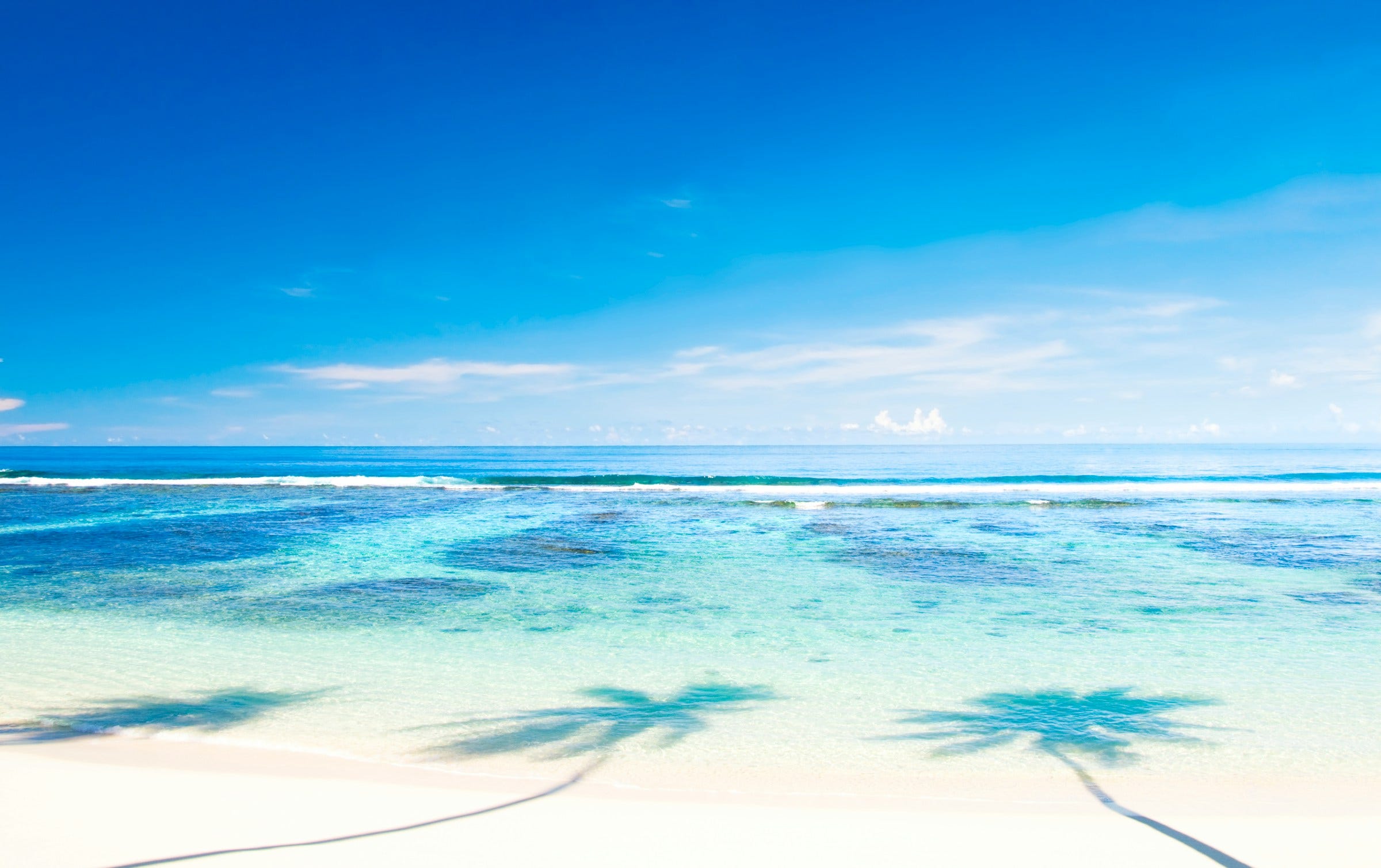
I’m on vacation this week at the beach so I decided to pre-schedule a topical post for you guys. It digs into an all important question: why do I spend such a large percentage of the other 51 weeks of the year daydreaming about this one? What exactly is it about wide open water that haunts our daydreams when we’re inland and relaxes us so powerfully when we’re at the beach?
Turns out both psychologists and biologists have offered explanations for why humans are so irresistibly drawn to sand and waves.
Water is a powerful stress buster
Go ahead and close your eyes and picture yourself at the beach. How do you feel? Did a deep sense of peace and well-being come over you just by imagining the sea? If so, the reason is more than just pleasant memories of family holidays past. It’s also biology.
“Recent experiments show that after just two minutes of viewing water outdoors, blood pressure and heart rate drop. It’s more calming to look at a lake, pool, or stream than trees or grass. And wider bodies of water bring more tranquility,” psychologists Adam Grant explained in his newsletter, Granted.
And that’s only one of the studies he mentions that show the beach actually acts to reduce stress in our bodies and calm our minds. Another bit of research, for example, found that looking at an aquarium calmed people before dental surgery more than hypnosis (dental entrepreneurs looking for decor ideas, take note).
The deep evolutionary reasons we love the sea
Grant doesn’t delve too deeply into why just looking at wide open water might have such a big impact on people, but other experts have. Marine biologist Wallace Nichols wrote a whole book about why we’re entranced by waterside environments called Blue Mind.
In it, he draws on the work of science educator Marcus Erikson to speculate that these environments might have been particularly happy places for our ancestors in the deep past. The open vistas allowed us to spot and evade incoming predators.
“Even better than that,” he continues, “the number of food and material resources provided in or near the water often trumped what could be found on land.” The supply of plant-based and animal food sources may vanish in the winter, Eriksen observed, but our ancestors could fish or harvest shellfish year-round if they were by the sea.
“And because the nature of water is to move and flow,” Nichols adds, “instead of having to travel miles to forage, our ancestors could walk along a shore or riverbank and see what water had brought to them or what came to the water’s edge.”
In short, beaches were a sort of primitive all-you-can-eat buffet/safe house for early humans. I’m no psychologist — though thanks to living on a small Mediterranean island, I am a regular beach goer — but I’d also speculate that the peaceful, warm buoyancy of the sea seems inherently soothing, perhaps as some primal reminder or our nine months floating in the womb and perhaps as an awe-inducing reminder of our connection to the natural world.
Whatever the exact reasons, the effects are crystal clear and scientifically confirmed — looking out at a large body of water is profoundly calming. Which probably explains why you zone out in the meetings all year imaging yourself on a lakeside towel or a sun lounger in the Caribbean. Consider this psychology deep-dive a free pass to indulge those daydreams as much as you like.
A version of this post originally appeared on Inc.com. Books and authors mentioned have affiliate links, meaning I receive a small commission if you click and go on to buy them.